Our Founder: Dr. Syed Hassan
Padma Shri Awardee · Nobel Peace Prize Nominee · Educationist & Humanist · "Simple Living, High Thinking"
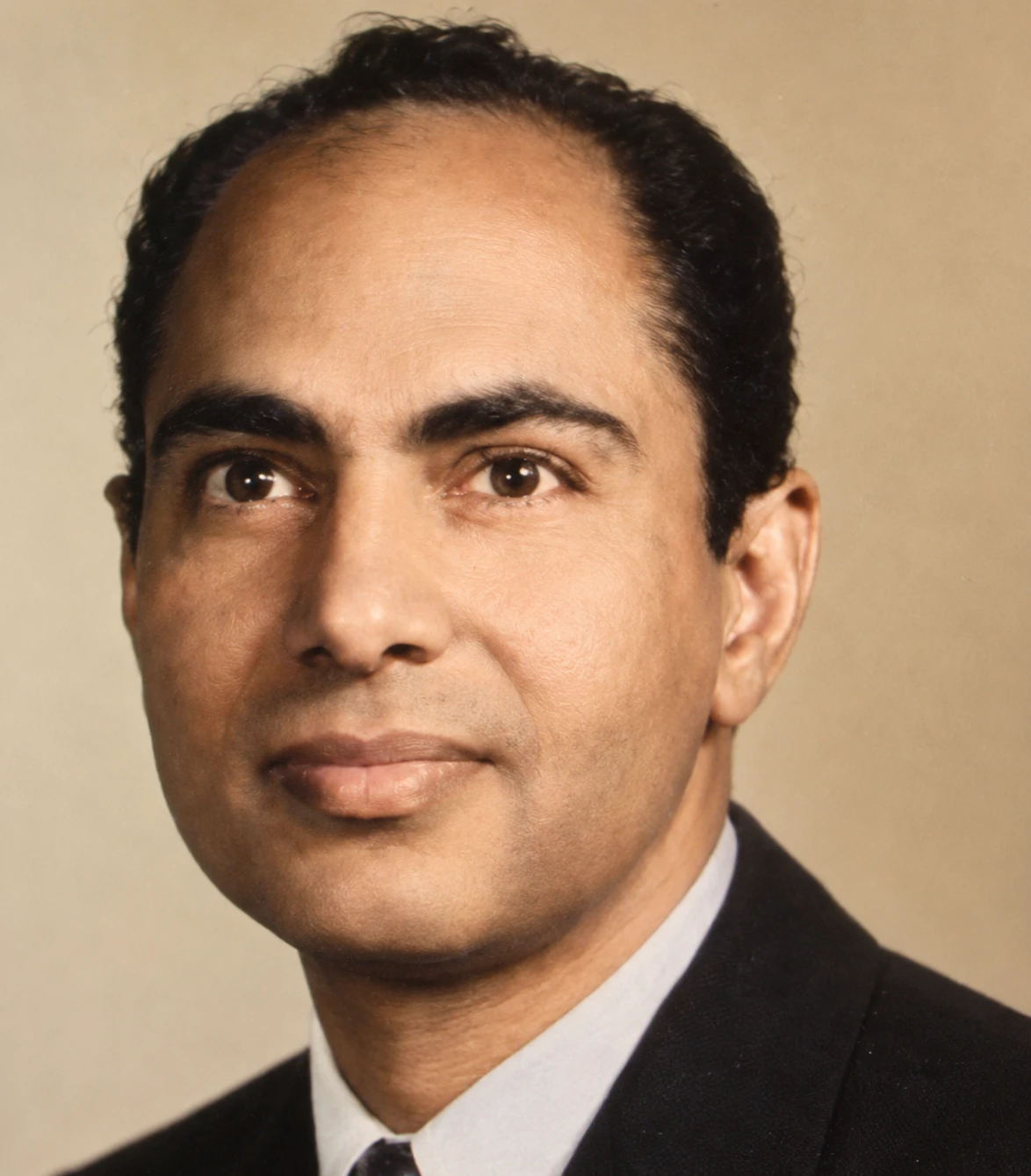
Dr. Syed Hassan
Dr. Syed Hasan (1924–2016), popularly known as “Syed Bhai” (Brother Syed), was an Indian educationist, humanist, and the founder of the INSAN Group of Institutions. He is known for his pioneering efforts to bring education to Kishanganj, formerly an educationally backward district in the Indian state of Bihar. A man of profound conviction, he embodied the principle of “Simple Living, High Thinking” throughout his entire life.
The Government of India awarded him the fourth highest civilian honour, the Padma Shri, in 1991. In 2003, he was nominated for the Nobel Peace Prize, the honour eventually going to Shirin Ebadi.
Biography
From a small town in Bihar to the halls of American universities, and back to serve his homeland — the extraordinary journey of a man who chose purpose over privilege.
Birth & Early Childhood
Syed Hasan was born on 30 September 1924 in the small town of Jehanabad, Bihar, India. Growing up in a modest household, young Syed exhibited an early curiosity for learning and an innate sense of justice and compassion for those around him.
Jamia Millia Islamia — Formative Years
When he was 10 years old, his parents enrolled him in Delhi at Jamia Millia Islamia (JMI). During his early education at JMI, Hasan had the life-changing opportunity to assist Mahatma Gandhi and also came under the tutelage of Dr. Zakir Husain, who would later become the President of India.
He graduated from JMI and started his career as a teacher there, where he stayed till he moved to the United States. These formative years under Gandhian ideals of self-reliance, dignity of labour, and communal harmony would become the bedrock of his entire life's work.
American Education & Academic Career
In 1955, Dr. Hassan moved to the United States on a fellowship from Lincoln University, Pennsylvania. He subsequently moved to Southern Illinois University, Carbondale, and stayed there till 1962, during which time he obtained his doctoral degree (Ph.D.).
He became a member of the prestigious educational societies Phi Delta Kappa and Kappa Delta Pi, and is reported to have financially assisted students from JMI to pursue education in the US.
In 1962, he took up the post of Assistant Professor of Psychology at Frostburg State University, Maryland. During the three years he spent there, he was awarded the “Instructor of the Year” once — a remarkable achievement for an Indian educator abroad.
Return to India — The Call of Duty
Despite promising opportunities and a successful academic career in the United States, Hasan returned to India in 1965. He had offers from many Indian universities, but chose a different path entirely. In a powerful act of selfless dedication, he resolved to bring education to the most neglected frontiers of Bihar.
After nearly one year of ground work, he founded the Taleemi Mission Corp (Educational Mission Corp) in February 1966, and Taleemi Biradri (Educational Brotherhood), an educational journal, in March 1966.
Founding of INSAN School
On 14 November 1966 (Children's Day), Dr. Hassan started an elementary-level INSAN School with just 36 students. This humble beginning would become the flagship institution of its kind. Initially, the school operated inside the premises of the National School before or after its school hours. Later, he moved the school to a rented hut.
The institution grew over the years to include INSAN School, INSAN College (now Insan Degree College), and INSAN Adult School — operating still mostly from huts, now instead of bamboo, in brick and tin style. What could not be built with bricks, he built with unwavering conviction.
National & International Recognition
The Government of India included him in the 1991 Republic Day honours list for the civilian honour of the Padma Shri. In 2003, he was shortlisted for the Nobel Peace Prize, the honour eventually going to Shirin Ebadi, the Iranian human rights activist.
A Light Eternal
Dr. Syed Hassan passed away on 25 January 2016 at the age of 91 in Kishanganj, Bihar — the very district he had transformed through education. He was laid to rest in the land he had devoted his life to, but his legacy lives on in every student who walks through the gates of the Insan institutions.
Simple Living, High Thinking
Dr. Syed Hassan lived by this timeless principle. Despite his doctorate from a prestigious American university and offers of comfort abroad, he chose to live among the people he served — in simplicity, with conviction.
Simple Living
He never sought personal wealth or comfort. He ran his schools from huts made of bamboo and later brick-and-tin structures. Dr. Hassan chose to live in modest quarters, dressing simply, eating simply, and leading by the example of dignified austerity. Every resource he could gather went into the education of children.
High Thinking
His intellectual vision was vast. Educated at Jamia Millia Islamia, Lincoln University, and Southern Illinois University, he brought world-class educational philosophy to the remote frontiers of Bihar. He believed in education for total development — academic, moral, and spiritual — not mere degree-granting.
The INSAN Educational Philosophy
The foundational values laid down by Dr. Syed Hassan continue to guide the mission of Insan Degree College. The word “INSAN” means “Human Being” — a name chosen deliberately to reflect the universal, humanist character of his educational vision.
Universal Humanity ('Insaniyat')
Education must rise above communal, religious, and socio-economic divides, welcoming all students and fostering universal brotherhood and harmony. The name “INSAN” (Human Being) reflects this inclusive ethos.
Self-Help & Self-Reliance
“Education should make us free from others. We should become capable of running our own affairs without the help of others as far as it is possible.” Dr. Hassan strongly advocated manual work, practical discipline, and independence through knowledge.
Total Development
“We believe in total development. Education should lead to self-development.” Dr. Hassan emphasized that education encompasses moral character, civic responsibility, intellectual growth, and active service to society and the nation.
Community-Centered Education
“Our institution is community centered.” Dr. Hassan believed schools must serve the communities they belong to. Education should not be an ivory tower exercise but a means of grassroots transformation.
Gandhian Values
Having personally assisted Mahatma Gandhi during his Jamia years, Dr. Hassan internalized the Gandhian principles of truth, non-violence, dignity of labour, and constructive nation-building through education.
Educator as Facilitator
“We the educators are here to facilitate and to assist this process of development.” Dr. Hassan saw teachers not as authorities dispensing knowledge, but as guides enabling the student's own growth and independence.
Awards & Honours
Over the years, Dr. Syed Hassan was honoured with many lifetime awards for his contribution to education, literacy, and national integration.
Padma Shri (1991)
Fourth highest civilian award, Government of India Republic Day Honours
Nobel Peace Prize Nomination (2003)
Nominated for pioneering educational reforms in underprivileged regions
Nehru Literacy Award
For exceptional contribution to adult education and literacy in rural Bihar
National Integration Award
For promoting communal harmony and secular education
Shiksha Bharti Puraskar
For outstanding contribution to the field of Indian education
Indira Gandhi Sadbhawna Award
For goodwill, communal amity, and social upliftment
Broader Contributions to Indian Education
Dr. Hassan's influence extended far beyond the walls of the INSAN institutions. He served on numerous provincial and national educational bodies.
- ▸ Educational Panel of the Bureau for Promotion of Urdu, New Delhi
- ▸ Children's Literacy Panel of the Bureau for Promotion of Urdu, New Delhi
- ▸ Bihar State Adult Education Board
- ▸ Bihar Urdu Academy
- ▸ Jamia Faculty Selection Committee
- ▸ Life Member, Indian Adult Education Board
- ▸ Central Advisory Board of Education (CABE)
- ▸ Grants & Aids Commission for Experiments in Education
- ▸ District Primary Education Program (DPEP)
- ▸ Decentralization of Education Management
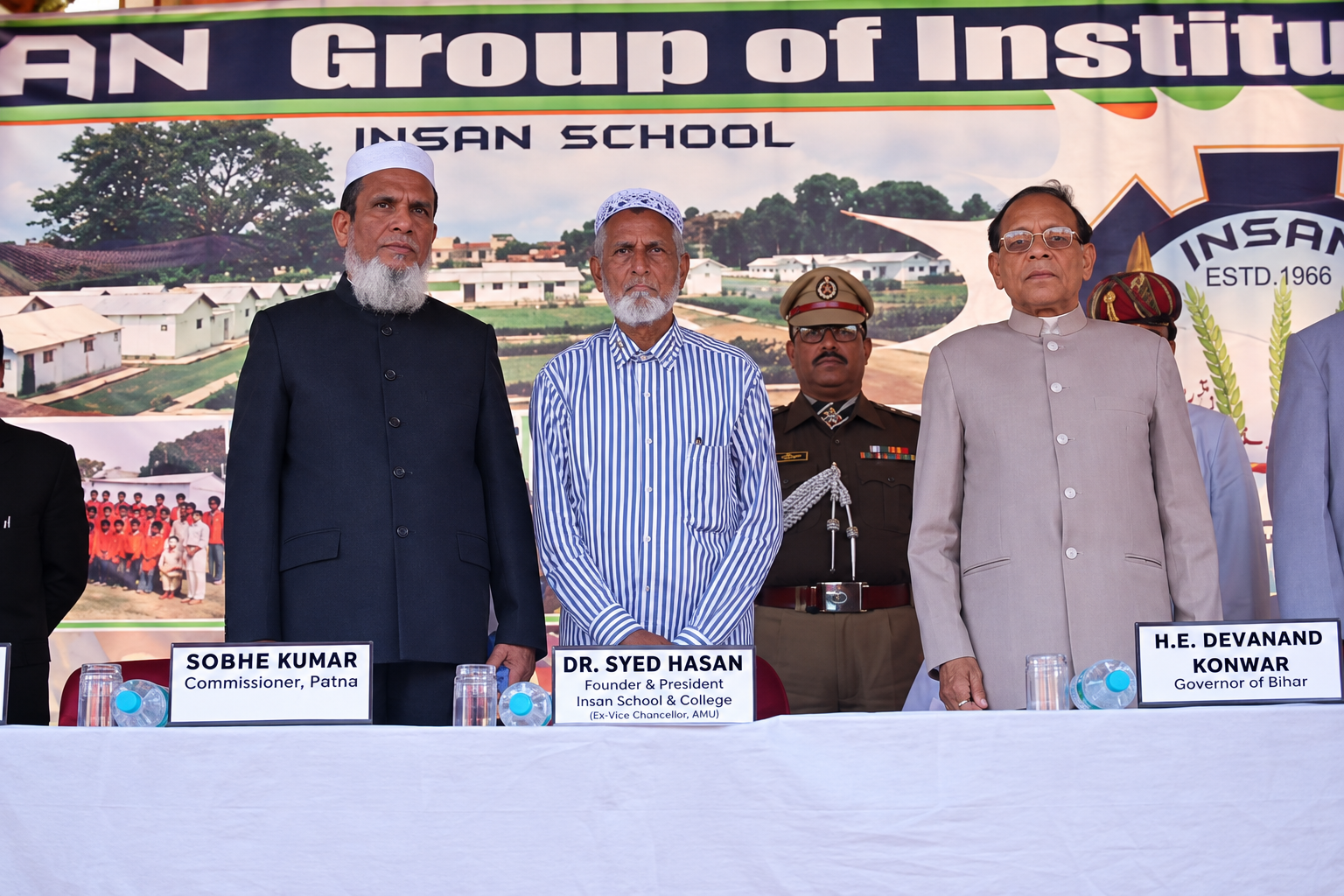
Archival Moments
Authentic photographic records documenting Dr. Syed Hassan's enduring journey with Insan institutions.


The biographical information on this page is sourced from publicly available records and the Wikipedia article on Dr. Syed Hassan.
Read on Wikipedia →